


What is an insurance claim?
An insurance claim is a formal request you send to your insurer asking them to pay out for a loss covered by your policy. Think of it like calling in a favour you already paid for. You pay premiums each month; when something goes wrong, a claim is how you collect on that agreement.
UK Insurance Claims Paid Out by Type (£ Billion)
Source: Association of British Insurers (ABI)
klaro.legal
The basic idea
When you buy insurance, you and the insurer make a deal. You pay regular premiums; they promise to cover certain losses. A claim is you holding them to that promise. Example: Tom's car is hit while parked. He files a claim with his insurer, who assesses the damage and pays for the repair.
What actually happens when you claim
You notify your insurer, usually by phone or online. They open a claim file and assign a claims handler. That person investigates, may send an assessor, then either approves payment, negotiates a settlement, or rejects the claim with a written reason.
Your duty to disclose
You must give your insurer accurate, complete information when making a claim. Providing false details can invalidate your claim and potentially your entire policy. This duty is set out in the Consumer Insurance (Disclosure and Representations) Act 2012.
Why it matters
Over 1 in 3 people do not fully read their insurance policy before signing, according to Citizens Advice research. Understanding even the basics, like your excess and what is excluded, can mean the difference between a successful claim and an avoidable rejection.
Types of insurance claims explained
Different insurance products have different claims processes. Here is what you need to know for the most common types.

Car insurance claims
Motor insurance claims are the most common in the UK, and claim frequency has been rising in recent years, partly driven by weather events (ABI). You can claim for damage to your own car (if you have comprehensive cover), damage you cause to others, or theft. Always report accidents to your insurer promptly, most policies require notification within 24 hours.
Home insurance claims
Home insurance splits into buildings insurance (the structure) and contents insurance (your belongings). A burst pipe claim goes through buildings; a stolen laptop goes through contents. Many people have both in a combined policy. Take photos of damage immediately and keep damaged items until your insurer has assessed them.
Life insurance claims
A life insurance claim is made by your beneficiaries after you die. They contact the insurer, provide a death certificate and policy documents, and the insurer pays out the agreed sum. Most straightforward claims are settled within 5-10 working days once documents are received. Critical illness policies pay out on diagnosis of specified conditions.
Health and travel insurance claims
Private health insurance claims often require pre-authorisation, you get approval from the insurer before treatment, not after. Travel insurance claims typically need receipts, medical reports, or police reports depending on what happened. Always keep documentation. Most travel insurers require you to report theft to local police within 24 hours.
How to make an insurance claim: step by step
Most claims follow the same basic path. Here are the 7 steps that take you from incident to payout.
Step 1: Make sure everyone is safe
Before anything else, if it is a road accident or home emergency, ensure people are safe and call 999 if needed. For car accidents, exchange details with all other drivers: name, address, insurer, and registration. You are legally required to do this under the Road Traffic Act 1988.
Step 2: Document everything immediately
Take photos and videos of damage, injuries, and the scene. Note the time, location, and weather. Get witness names and contact details if relevant. For theft or crime, get a police crime reference number. This evidence is the foundation of your claim.
Step 3: Notify your insurer promptly
Contact your insurer as soon as possible, within 24 hours for accidents, within a few days for other events. Most major UK insurers now have 24/7 claims lines and app-based reporting. Check your policy for the exact notification window, as missing it can affect your claim.
Step 4: Complete the claim form accurately
Your insurer will send you a claim form or guide you through one online. Answer every question honestly and in full. Include all relevant dates, amounts, and descriptions. Attach your evidence (photos, receipts, police reports). Incomplete forms are a leading cause of delays.
Step 5: Cooperate with the assessment
The insurer may send a loss adjuster or approved repairer to assess the damage. You can also hire your own loss assessor to represent your interests, this is especially useful for large claims. Keep a record of all communication: dates, names, and what was said.
Step 6: Review the settlement offer
The insurer will make a settlement offer. You do not have to accept the first offer if you believe it is too low. You can negotiate, provide additional evidence, or ask them to reconsider. Get any settlement agreement in writing before accepting.
Step 7: Pay your excess
Your excess is the amount you contribute towards the claim. It is deducted from the payout. Example: your claim is £1,500 and your excess is £250, you receive £1,250. For third-party claims where you are not at fault, you usually do not pay an excess.
Evidence is everything. Take detailed photos, keep receipts, record dates and names. The difference between a successful claim and a rejected one often comes down to documentation quality. Invest time upfront to save weeks of back-and-forth later.
Should you claim or pay out of pocket?
Not every incident is worth claiming. This decision comes down to three things: the cost of the damage, your excess, and the likely impact on your future premiums.
The rough threshold to use
If the cost of the damage is less than double your excess, paying out of pocket is often worth considering. Example: your excess is £400, damage costs £600. Claiming saves you £200, but your premium could rise by more than that over the next two or three years.
Small claims: usually not worth it
A small claim can trigger a premium increase at renewal and remove a no-claims discount worth hundreds of pounds per year. For claims under roughly £500-£750 above your excess, many financial advisers suggest paying out of pocket. Get a repair quote first before deciding.
Large claims: almost always worth claiming
If damage runs into thousands of pounds, the premium impact becomes less significant relative to the payout. Serious accidents, major structural damage, and theft of expensive items are almost always worth claiming. That is exactly what insurance is for.
Third-party claims: always notify
If another person is involved, even if you decide not to claim, you must still notify your insurer. This protects you if the third party later decides to claim against you. Failure to notify can invalidate your policy.
First-party vs third-party claims: what is the difference?
These two terms appear in almost every insurance context. Once you know what they mean, policy documents become much easier to read.
insuranceClaimsUKGuide.sections.firstVsThirdParty.items.firstPartyClaims.title
insuranceClaimsUKGuide.sections.firstVsThirdParty.items.firstPartyClaims.text
insuranceClaimsUKGuide.sections.firstVsThirdParty.items.thirdPartyClaims.title
insuranceClaimsUKGuide.sections.firstVsThirdParty.items.thirdPartyClaims.text
insuranceClaimsUKGuide.sections.firstVsThirdParty.items.whichAreYou.title
insuranceClaimsUKGuide.sections.firstVsThirdParty.items.whichAreYou.text
insuranceClaimsUKGuide.sections.firstVsThirdParty.items.thirdPartyNotification.title
insuranceClaimsUKGuide.sections.firstVsThirdParty.items.thirdPartyNotification.text
Key claims terms in plain English
Insurance documents are full of words that sound technical but have simple meanings. Here are the ones that matter most when making a claim.
Excess
The amount you contribute to every claim. It is deducted from your payout. There are two types: compulsory (set by the insurer) and voluntary (you choose a higher amount in exchange for lower premiums). Always check the total excess before claiming.
insuranceClaimsUKGuide.sections.keyTerms.items.deductible.title
insuranceClaimsUKGuide.sections.keyTerms.items.deductible.text
insuranceClaimsUKGuide.sections.keyTerms.items.settlement.title
insuranceClaimsUKGuide.sections.keyTerms.items.settlement.text
Loss adjuster
An independent professional appointed by the insurer to investigate and assess your claim. They work for the insurer, not for you. For large or complex claims, you can appoint your own loss assessor, they work for you and negotiate on your behalf.
insuranceClaimsUKGuide.sections.keyTerms.items.claimsHandler.title
insuranceClaimsUKGuide.sections.keyTerms.items.claimsHandler.text
insuranceClaimsUKGuide.sections.keyTerms.items.policyExclusion.title
insuranceClaimsUKGuide.sections.keyTerms.items.policyExclusion.text
Subrogation
When your insurer pays your claim and then steps into your shoes to recover that money from the party responsible. You are made whole; your insurer recoups from the third party. You do not need to manage this, it happens in the background.
insuranceClaimsUKGuide.sections.keyTerms.items.underinsured.title
insuranceClaimsUKGuide.sections.keyTerms.items.underinsured.text
How long does a claim take to settle in the UK?
Settlement times vary significantly by claim type and complexity. Here is a realistic picture of what to expect.
insuranceClaimsUKGuide.sections.timelines.items.simpleVsComplex.title
insuranceClaimsUKGuide.sections.timelines.items.simpleVsComplex.text
insuranceClaimsUKGuide.sections.timelines.items.lifeInsuranceTimelines.title
insuranceClaimsUKGuide.sections.timelines.items.lifeInsuranceTimelines.text
insuranceClaimsUKGuide.sections.timelines.items.motorClaimsTimelines.title
insuranceClaimsUKGuide.sections.timelines.items.motorClaimsTimelines.text
insuranceClaimsUKGuide.sections.timelines.items.homeClaimsTimelines.title
insuranceClaimsUKGuide.sections.timelines.items.homeClaimsTimelines.text
insuranceClaimsUKGuide.sections.timelines.items.whatSlowsYouDown.title
insuranceClaimsUKGuide.sections.timelines.items.whatSlowsYouDown.text
insuranceClaimsUKGuide.sections.timelines.items.regulatoryDeadlines.title
insuranceClaimsUKGuide.sections.timelines.items.regulatoryDeadlines.text
What to do if your claim is rejected
A rejection is not the end of the road. Around 37% of insurance complaint decisions at the Financial Ombudsman Service go in favour of the consumer. Here is how to fight back.
insuranceClaimsUKGuide.sections.rejectedClaims.items.whyRejected.title
insuranceClaimsUKGuide.sections.rejectedClaims.items.whyRejected.text
insuranceClaimsUKGuide.sections.rejectedClaims.items.askForExplanation.title
insuranceClaimsUKGuide.sections.rejectedClaims.items.askForExplanation.text
insuranceClaimsUKGuide.sections.rejectedClaims.items.reviewYourPolicy.title
insuranceClaimsUKGuide.sections.rejectedClaims.items.reviewYourPolicy.text
insuranceClaimsUKGuide.sections.rejectedClaims.items.negotiateAndAppeal.title
insuranceClaimsUKGuide.sections.rejectedClaims.items.negotiateAndAppeal.text
insuranceClaimsUKGuide.sections.rejectedClaims.items.complaintProcess.title
insuranceClaimsUKGuide.sections.rejectedClaims.items.complaintProcess.text
insuranceClaimsUKGuide.sections.rejectedClaims.items.ombudsman.title
insuranceClaimsUKGuide.sections.rejectedClaims.items.ombudsman.text
insuranceClaimsUKGuide.sections.rejectedClaims.items.solicitor.title
insuranceClaimsUKGuide.sections.rejectedClaims.items.solicitor.text
insuranceClaimsUKGuide.sections.rejectedClaims.items.beforeYouGiveUp.title
insuranceClaimsUKGuide.sections.rejectedClaims.items.beforeYouGiveUp.text
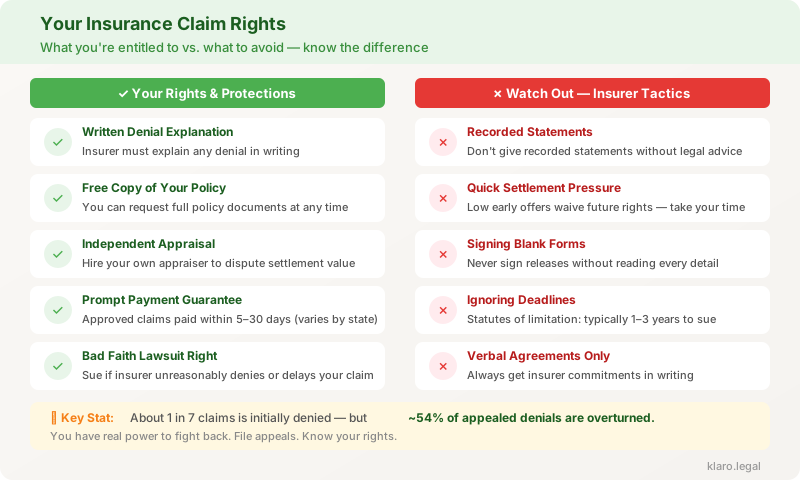
Your rights under UK law
Several laws and regulations protect you when making a claim. You do not need to know the legal details, but knowing these exist gives you confidence to push back when something feels wrong.
insuranceClaimsUKGuide.sections.yourRights.items.consumerRights.title
insuranceClaimsUKGuide.sections.yourRights.items.consumerRights.text
insuranceClaimsUKGuide.sections.yourRights.items.insuranceAct.title
insuranceClaimsUKGuide.sections.yourRights.items.insuranceAct.text
insuranceClaimsUKGuide.sections.yourRights.items.fca2022Rules.title
insuranceClaimsUKGuide.sections.yourRights.items.fca2022Rules.text
insuranceClaimsUKGuide.sections.yourRights.items.ombudsman.title
insuranceClaimsUKGuide.sections.yourRights.items.ombudsman.text
insuranceClaimsUKGuide.sections.yourRights.items.limitation.title
insuranceClaimsUKGuide.sections.yourRights.items.limitation.text
insuranceClaimsUKGuide.sections.yourRights.items.uninsuredLosses.title
insuranceClaimsUKGuide.sections.yourRights.items.uninsuredLosses.text
Your rights under UK consumer and insurance law are non-negotiable. If your insurer breaches them, you have multiple routes to escalate : from complaint letters to the Financial Ombudsman Service to court action. Never accept a blanket rejection if you believe you have a valid claim.