


Severance Package Explained
What is a Severance Package and Who Gets One
A severance package is compensation your employer gives you when your job ends, but it's not guaranteed. Think of it as a financial bridge to help you land on your feet.

Severance Package Basics
Severance is money and benefits you receive when you're laid off or terminated. It usually includes cash payments, health insurance continuation, and sometimes career transition help. It's separate from your final paycheck and unused vacation time.
Who Typically Receives Severance
Layoffs almost always come with severance if the company offers it. Terminations for performance might include severance depending on company policy. Being fired for misconduct usually means no severance. About 60% of companies offer severance during layoffs.
No Federal Legal Requirement
There's no federal law requiring severance pay in the US. Companies offer it to reduce legal risk, maintain their reputation, and help employees transition. Some states have specific requirements for mass layoffs, but individual severance is voluntary.
When Severance is Required
You're entitled to severance if your employment contract promises it, your employee handbook guarantees it, or your company has an established practice of providing it. Union contracts often include severance requirements too.
Types of Severance Packages Explained
Not all severance packages are the same. Companies structure them differently based on your level, years of service, and the reason you're leaving.
Standard Employee Severance
Most common severance follows a formula: 1-2 weeks of pay for each year worked. Example: Sarah worked 5 years and earned $60,000. Her severance would be 5-10 weeks of pay ($5,769 to $11,538).
Executive Severance Packages
Executives get much more generous packages, often 6-24 months of salary plus bonuses, stock options, and enhanced benefits. These are usually negotiated individually and can include non-compete payments.
Mass Layoff Severance
When companies lay off many people, they often offer enhanced packages to avoid lawsuits. These might include additional weeks of pay, extended health benefits, and career transition services like resume writing or job placement help.
Early Retirement Packages
Companies sometimes offer voluntary severance to older workers to avoid layoffs. These packages often include healthcare coverage until Medicare eligibility and may bridge pension benefits. They're designed to incentivize voluntary departures.
What's Included in Your Severance Package
Severance packages are more than just cash. Here's what you might receive and what each piece means for your finances.
Cash Severance Payments
The core of your package is usually a lump sum or installment payments based on your salary. This is taxable income subject to federal and state taxes, plus Social Security and Medicare taxes. You'll get a W-2 for these payments.
Health Insurance Continuation
Many packages include continued health coverage for a few months at company rates. This is separate from COBRA, you pay less than the full COBRA premium. After this period ends, you can elect regular COBRA coverage.
Retirement Account Treatment
Your 401(k) stays yours, but company matching might be affected. Unvested stock options often expire within 90 days. Some packages accelerate vesting or extend your exercise period. Check your stock plan documents carefully.
Career Transition Support
Larger packages often include outplacement services, professional resume writing, career coaching, and job search assistance. These services typically last 3-6 months and can be worth $3,000-$15,000 in professional help.
How Severance Pay is Calculated
Most companies use formulas to determine severance amounts, but there's room for negotiation. Here's how the math typically works.
Severance Pay Range by Position Level
Source: Bureau of Labor Statistics
klaro.legal
Standard Severance Formula
The most common formula: weeks of severance = years of service × 1 or 2. So 7 years of service = 7-14 weeks of pay. Some companies cap it at 26 weeks maximum, others at 52 weeks regardless of tenure.
Which Salary Figure is Used
Severance usually calculates from your base salary, not total compensation. If you earned $80,000 base plus $20,000 bonus, severance calculates from the $80,000. Some executive packages include recent bonuses in the calculation.
Minimum and Maximum Limits
Many companies set minimums (like 2 weeks regardless of tenure) and maximums (like 26 or 52 weeks total). The rule of 70, your age plus years of service, sometimes determines enhanced packages for older workers.
Industry-Specific Calculations
Tech companies often offer 2-4 weeks per year of service. Manufacturing averages 1-2 weeks. Financial services can go higher for senior roles. Startups might offer equity instead of cash, while nonprofits typically offer minimal severance.
Real Severance Examples by Industry
Severance varies dramatically by industry and company size. Here's what you can typically expect in different sectors.
Severance Benefits by Industry
Source: Society for Human Resource Management
klaro.legal
Technology Industry Severance
Tech companies are generally generous: 2-4 weeks per year of service, often with a 4-week minimum. Example: A software engineer with 3 years gets 12 weeks pay plus 4 months of health insurance. Stock options might vest immediately.
Manufacturing and Industrial
Traditional manufacturers offer 1-2 weeks per year, often capped at 26 weeks. A factory worker with 15 years might get 26 weeks (the cap) plus 6 months of health benefits. Union contracts often specify exact formulas.
Financial Services Severance
Banks and investment firms vary widely by role. Tellers might get 2 weeks per year, while investment bankers could get 3-6 months guaranteed. Compliance with securities regulations affects stock option treatment.
Retail and Hospitality
These industries typically offer minimal severance, often just 1 week per year of service with low caps. A store manager with 8 years might get 8 weeks pay. Seasonal workers rarely receive severance packages.
When Companies Must Provide Severance
While most severance is voluntary, some situations legally require it. Here's when you're actually entitled to severance pay under federal and state laws.
Employment Contract Requirements
If your employment contract specifically promises severance, your employer must honor it under contract law. Executive contracts almost always include severance terms. Review your original offer letter and employment agreement for any severance promises, these are legally binding.
Employee Handbook Policies
If your employee handbook describes a severance policy, courts often treat it as a binding promise. Companies can't arbitrarily deny handbook benefits. Always keep a copy of the handbook from when you were hired.
WARN Act and Mass Layoff Laws
The federal WARN Act requires 60 days notice for large layoffs but doesn't mandate severance. However, many companies provide severance in lieu of notice. Some states like New York have additional requirements for mass layoffs.
Established Company Practices
If your company has consistently provided severance to similarly situated employees, you might have a legal claim to it too. Courts sometimes find 'implied contracts' based on past practice, especially if the company has never denied severance before.
How to Negotiate Your Severance Package
Most initial severance offers aren't final. Here's how to professionally ask for more, and what leverage you actually have.
When and How to Start Negotiations
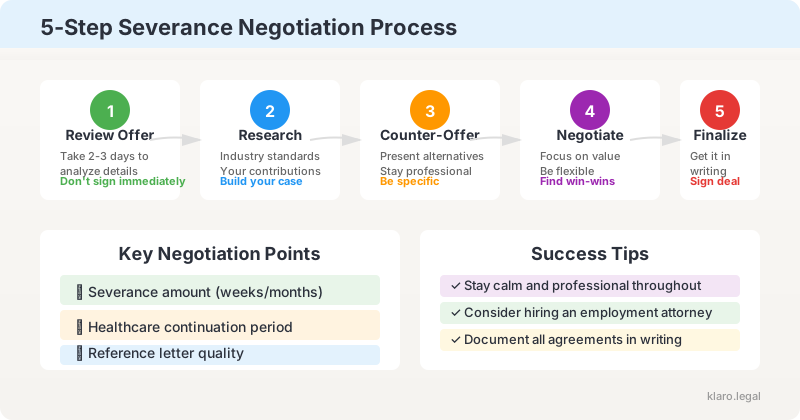
You usually have 21-45 days to review a severance agreement, so don't rush. Start by thanking them for the offer, then ask for specific improvements. Never threaten legal action immediately, that ends negotiations fast.
What to Ask For in Negotiations
Focus on specific requests: additional weeks of pay, extended health benefits, accelerated stock vesting, or outplacement services. Avoid vague asks like 'more money.' Use your years of service and company performance as leverage points.
Your Negotiation Leverage
You have more leverage than you think: potential legal claims, institutional knowledge, client relationships, and the company's desire to avoid bad publicity. Senior employees and those with specialized skills typically have the most negotiating power.
Professional Negotiation Tactics
Always negotiate in writing via email for documentation. Be respectful but persistent. Consider hiring an employment attorney for packages over $25,000, their involvement often signals you're serious and can increase offers by 20-50%.