


klaro.legal mini podcast
What Makes a Lease Agreement Legal
A lease becomes legally binding when it includes specific required elements. Missing any of these could make your agreement unenforceable in court.
Most Common Lease Violations & Average Penalties You Face
Source: National Apartment Association Survey
klaro.legal
Who's Involved (The Parties)
Your lease must clearly name everyone involved. This includes you (the tenant), your landlord (the lessor), and any co-signers. If multiple people are renting together, all names should appear on the lease. This determines who's legally responsible for rent and damages.
Exact Property Details
The lease must describe exactly what you're renting. This includes the full address, apartment number, and any included spaces like parking spots or storage units. Vague descriptions like 'the apartment' aren't legally sufficient.
Rent Amount and Payment Schedule
Your lease must state exactly how much rent you pay and when it's due. This includes the monthly amount, due date (like the 1st of each month), and accepted payment methods. Late fees and grace periods must also be clearly specified.
Start and End Dates
Every lease needs clear start and end dates. Month-to-month agreements need the monthly renewal date. Fixed-term leases need the exact day the lease ends. This prevents confusion about when you can move in and must move out.
Valid Signatures from All Parties
Both you and your landlord must sign the lease for it to be valid. Electronic signatures are legal in all 50 states as of 2026. Co-signers and guarantors must also sign if they're part of the agreement.
Essential Terms Every Tenant Must Know
These clauses directly affect your daily life and wallet. Understanding them prevents surprise costs and protects your rights as a tenant.

Security Deposit Amount and Return Rules
Most leases require 1-1.5 times your monthly rent as a security deposit. The lease should specify when you get it back (typically 14-30 days after moving out) and what deductions are allowed. Only damage beyond normal wear and tear should reduce your deposit.
Who Fixes What When Things Break
Your lease divides repair duties between you and your landlord. Generally, landlords handle major repairs (heating, plumbing, electrical) while tenants handle minor issues (changing light bulbs, basic cleaning). Know what's your responsibility to avoid surprise bills.
Pet Policies and Associated Costs
Pet clauses cover which animals are allowed, pet deposits (typically $200-500), and monthly pet rent. Some leases ban all pets, while others allow only certain types or sizes. Emotional support animals have different rules under fair housing laws.
Guest Policies and Who Can Live There
Most leases limit how long guests can stay (usually 7-14 days per month) and restrict who can live in the unit permanently. Adding someone not on the lease typically requires landlord approval. Violating occupancy rules can result in eviction.
What's Included vs. What You Pay
Your lease specifies which utilities are included in rent and which you pay separately. Common inclusions are water and trash, while electricity and internet are often separate. This affects your total monthly housing cost significantly.
How to Read Your Lease Step by Step
Reading a lease systematically ensures you don't miss important details. Follow this order to understand every part of your agreement before signing.
Step 1: Verify Names, Address, and Dates
Check that all names are spelled correctly and match your ID. Confirm the property address is exact and includes unit numbers. Verify move-in and move-out dates match what you agreed to verbally. Errors here cause major problems later.
Step 2: Calculate Your True Monthly Cost
Add up rent plus any required fees (pet rent, parking, amenity fees). Don't forget one-time costs like security deposits and application fees. This gives you the real cost of living there, not just the advertised rent price.
Step 3: Know How the Lease Can End
Find the section about lease termination and renewal. Look for automatic renewal clauses that could trap you. Understand notice requirements for moving out (typically 30-60 days). Know what happens if you break the lease early.
Step 4: List All Rules and Restrictions
Make a list of everything you can't do: smoking, painting walls, hanging pictures, having guests overnight. These restrictions affect how you live in the space. Some are reasonable, others might be deal-breakers.
Step 5: Question Unclear Terms
Circle any language you don't understand completely. Terms like 'reasonable wear and tear' or 'quiet enjoyment' need clarification. Ask your landlord to explain unclear clauses in writing before signing.
Red Flags That Signal Bad Landlords
Certain lease clauses reveal landlords who don't follow proper legal procedures or respect tenant rights. Watch for these warning signs before signing.
Late Fees Above 5% of Monthly Rent
Reasonable late fees are typically $25-50 or 5% of monthly rent, whichever is less. Fees of $100+ or 10% of rent suggest a landlord focused on profit over fairness. Some states cap late fees by law.
Clauses That Waive Your Legal Rights
Avoid leases that make you waive rights to habitable housing, privacy, or legal remedies. Clauses saying 'tenant accepts property as-is' or 'landlord not responsible for injuries' are often unenforceable and signal bad landlords.
No Notice Required for Landlord Entry
Landlords must give 24-48 hours notice before entering your unit (except emergencies). Leases allowing entry 'at any time' or 'with reasonable notice' without defining 'reasonable' violate your privacy rights in most states.
Automatic Renewal Without Clear Notice
Beware clauses that automatically renew your lease unless you give notice months in advance. Fair leases require 30-60 days notice. Automatic renewals with 90+ day notice requirements trap tenants in unwanted lease extensions.
Unclear Maintenance Responsibilities
Good leases clearly divide maintenance duties. Red flags include 'tenant responsible for all repairs' or vague language about what constitutes normal wear and tear. This often leads to disputes over who pays for what.
The 5 P's of Leasing Explained
Real estate professionals use the '5 P's' framework to evaluate lease agreements. Understanding these helps you think like a pro when reviewing your lease.
Parties: Who's Legally Bound
This covers everyone with legal obligations under the lease. Primary parties are landlord and tenant. Secondary parties include guarantors and co-signers. Each party's responsibilities and rights should be clearly defined in the lease terms.
Property: Exactly What You're Renting
The specific real estate you're leasing, including boundaries and included amenities. This covers the unit itself, parking spaces, storage areas, and access to common areas like pools or gyms. Ambiguous property descriptions cause disputes.
Price: Total Cost Structure
All financial obligations including base rent, fees, deposits, and utilities. This encompasses monthly rent, security deposits, pet fees, parking costs, and any other charges. Understanding total price prevents budget surprises.
Period: How Long the Lease Lasts
The duration of your lease agreement and renewal options. Fixed-term leases have set start and end dates. Month-to-month agreements continue until someone gives notice. Know your commitment length and exit options.
Provisions: Rules and Special Conditions
All the rules, restrictions, and special clauses that govern your tenancy. This includes pet policies, guest restrictions, maintenance responsibilities, and termination conditions. Provisions define how you can use the property.
Understanding the 1% Rule
The 1% rule helps you evaluate whether your rent is reasonable for the property value. While mainly used by investors, understanding it helps tenants negotiate fair rental prices. This rule states that monthly rent should not exceed 1% of the property's market value. For a $300,000 home, reasonable rent would be around $3,000 per month or less.
What Is the 1% Rule in Real Estate
The 1% rule is a quick screening tool investors use to determine if a rental property will generate positive cash flow. Monthly rent should equal at least 1% of the property's purchase price or current market value. For example, a $200,000 property should rent for at least $2,000 monthly to meet this threshold.
When Your Rent Might Be Too High
If your rent exceeds 1.5% of the property's estimated value, you might be overpaying. Use online property value estimators like Zillow or Redfin to check local home prices. High rent-to-value ratios often indicate overpriced rentals or properties in declining neighborhoods.
Using the Rule to Negotiate Lower Rent
Present the 1% rule data to landlords when negotiating rent reductions. Show comparable property values and current rent prices in your area. Landlords often don't realize their rent exceeds market standards, especially in rapidly changing neighborhoods.
Market Variations and Exceptions
The 1% rule varies by location and market conditions. In expensive cities like San Francisco or New York, properties rarely meet the 1% threshold due to high property values. In these markets, 0.5-0.7% might be normal, while rural areas often exceed 1%.
Money Matters: Deposits and Fees
Understanding all costs upfront prevents financial surprises and helps you budget for moving. Many fees can be negotiated or avoided entirely.
Security Deposit Basics and State Limits
Security deposits typically range from 1-2 months' rent, depending on state laws. Some states cap deposits (California limits to 2 months for unfurnished units), while others have no limits. Deposits must be returned within 14-60 days after move-out, depending on your state's laws.
Application and Administrative Fees
Application fees cover background and credit checks, typically $25-100 per applicant. Administrative fees ($50-200) cover lease preparation and processing. Both are usually non-refundable, even if your application is denied. Some states limit or ban application fees entirely.
Pet Deposits vs. Monthly Pet Rent
Pet deposits ($200-500) are typically refundable if no pet damage occurs. Monthly pet rent ($25-75) is ongoing and non-refundable. Some places charge both. Service animals and emotional support animals may be exempt from these fees.
Parking and Amenity Charges
Parking fees range from $50-300+ monthly depending on location. Amenity fees might cover gym, pool, or common area access. These fees are often separate from base rent and can increase your total housing cost by 10-20%.
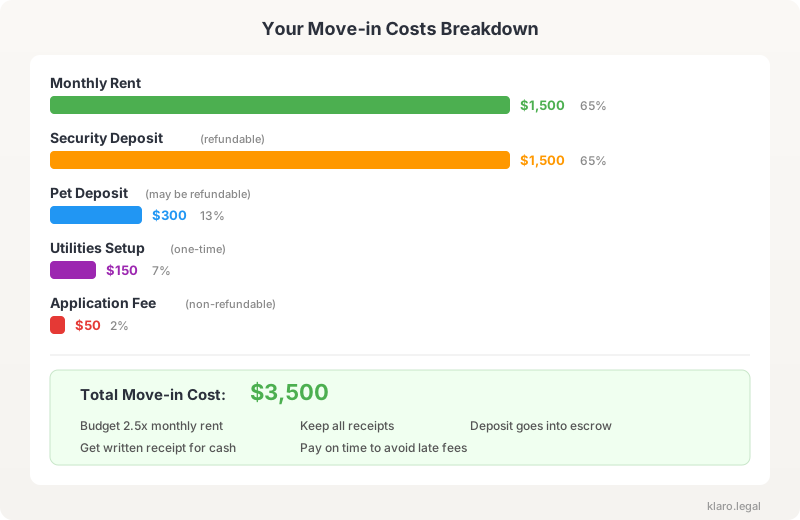
Calculate Total Move-In Costs
Add first month's rent, last month's rent (if required), security deposit, pet fees, parking, and any other charges. Total move-in costs often equal 2-4 months of rent. Budget accordingly and ask about payment plans if needed.
Your Rights During the Lease
Federal and state laws give tenants specific rights that leases cannot override. Knowing these rights protects you from landlord overreach and illegal practices.
Tenant Rights Awareness in the UK
Source: Shelter Housing Survey & Citizens Advice
klaro.legal
Right to Livable Housing Conditions
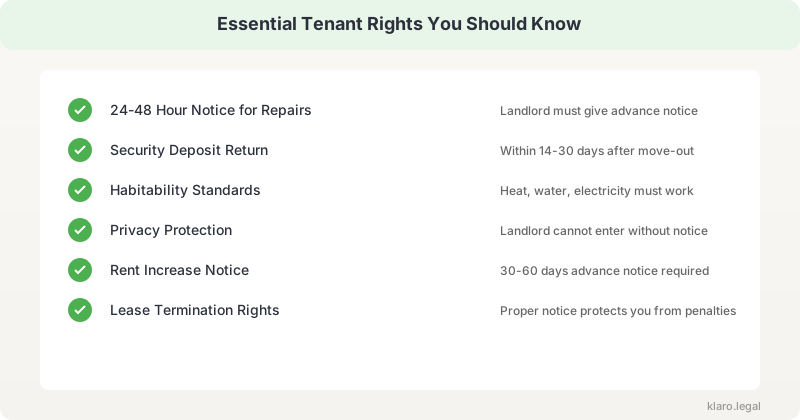
Your landlord must provide basic habitability: working heat, plumbing, electricity, and structural safety. Leases cannot waive this right. If your rental becomes uninhabitable, you may withhold rent or break the lease without penalty in many states.
Privacy and Landlord Entry Rules
Landlords must give 24-48 hours notice before non-emergency entry. Valid reasons include repairs, inspections, and showing to prospective tenants. Emergency entry (fire, flood, gas leak) doesn't require notice. Document any violations of entry rules.
Right to Peaceful Use of Your Home
Quiet enjoyment means using your rental without unreasonable interference from your landlord. This includes protection from harassment, excessive visits, or interference with utilities. Landlords cannot retaliate for asserting this right.
Protection from Discrimination
Fair housing laws prohibit discrimination based on race, religion, sex, disability, familial status, or national origin. Some states add sexual orientation and gender identity. This applies to rental decisions, lease terms, and treatment during tenancy.
Protection from Landlord Retaliation
Landlords cannot retaliate against tenants who complain about habitability issues, report code violations, or join tenant organizations. Retaliation includes raising rent, reducing services, or threatening eviction. Most states provide 90-180 days of protection after complaints.
Breaking Your Lease Early
Sometimes life changes require moving before your lease ends. Understanding your options and obligations helps minimize financial damage and legal complications.
Early Termination Clauses in Your Lease
Some leases include early termination options for specific situations. Common triggers include job relocations, military deployment, or domestic violence situations. These clauses typically require 30-60 days notice and sometimes penalty fees.
Military Servicemember Protections
The Servicemembers Civil Relief Act allows military personnel to break leases for deployment or permanent change of station orders. This federal law requires 30 days notice and protects against penalties. Landlords must honor this regardless of lease terms.
Landlord's Duty to Find New Tenants
Most states require landlords to make reasonable efforts to re-rent your unit after you leave early. This is called 'mitigation of damages.' You're only responsible for rent until a new tenant moves in, not the entire remaining lease term.
Negotiating with Your Landlord
Approach your landlord early with your situation and proposed solutions. Offer to help show the unit or forfeit your security deposit. Many landlords prefer cooperation over legal battles. Get any agreements in writing before moving out.
Subletting vs. Assignment Options
Subletting means you remain on the lease while someone else pays and lives there. Assignment transfers your lease entirely to a new tenant. Check your lease for restrictions and required landlord approval. These options can help you avoid breaking the lease entirely.
Renewal and Moving Out
The end of your lease brings important decisions and deadlines. Understanding renewal processes and move-out requirements protects your security deposit and future rental options.
When You Must Decide About Renewal
Most leases require 30-60 days notice if you plan to move out. Some automatically renew unless you give notice. Missing notice deadlines can extend your lease for another full term. Mark these dates on your calendar when you sign.
How Much Rent Can Increase
Some states and cities cap annual rent increases (typically 3-5%). Others allow market-rate increases with proper notice (usually 30 days for month-to-month, 60+ days for year leases). Know your local rent control laws before renewal negotiations.
Moving Out Inspection Process
Schedule a pre-move-out inspection to identify issues that might affect your deposit. Document the property's condition with photos. Clean thoroughly and complete any required maintenance. This prevents surprise deductions from your security deposit.
Providing Your New Address
Give your landlord a forwarding address in writing for security deposit return. Most states require deposit return within 14-60 days. Without a forwarding address, landlords may legally keep your deposit or send it to the state as unclaimed property.
Final Walkthrough Documentation
Do a final walkthrough with your landlord if possible. Document any pre-existing damage you're not responsible for. Get a written statement about the property's condition. This prevents disputes about normal wear and tear vs. tenant damage.
When to Upload Your Lease for Translation
Even with this guide, lease agreements contain complex legal language that's hard to understand. klaro.legal translates your actual lease into plain English, ensuring you understand every clause before signing.
Upload Before Signing Any Agreement
Get your lease translated into plain English before you sign. This helps you identify unfavorable terms, hidden fees, and concerning clauses. Understanding your lease completely prevents costly surprises and protects your rights as a tenant.
When Legal Jargon Confuses You
Leases often use terms like 'hereditaments,' 'quiet enjoyment,' or 'covenant.' If any clause leaves you wondering what it actually means for your daily life, upload your lease. klaro.legal explains every term in everyday language.
During Disputes with Your Landlord
If conflicts arise about lease interpretation, having a plain English translation helps you understand your position. klaro.legal's explanations help you communicate more effectively with your landlord and know when to seek legal help.
Before Renewal Negotiations
Understanding your current lease terms gives you power in renewal negotiations. Upload your lease to identify clauses you want changed and understand which terms favor you vs. your landlord. Knowledge is your best negotiation tool.
When Comparing Different Properties
If you're choosing between multiple rentals, upload all lease agreements to compare terms side-by-side in plain English. This helps you identify which lease offers better protection, lower total costs, and more favorable terms.