


Claims Adjuster
A claims adjuster is the person your insurance company assigns to evaluate your claim. They inspect damage, review your policy, and calculate how much the insurer will pay. Think of them as the insurance company's fact-finder, their job is to assess what happened and put a dollar figure on it.
What Is a Claims Adjuster? (Plain-Language Definition)
A claims adjuster is the person your insurer sends to decide how much your claim is worth. They work through three steps: investigate what happened, figure out what your policy covers, and calculate a payout amount. That final number becomes your settlement offer.
What Happens After You File a Claim?
Source: Insurance Information Institute / J.D. Power Claims Satisfaction Study
klaro.legal
The Adjuster's Core Job
Think of the adjuster as a fact-finder hired by your insurance company. They visit the scene, review photos, read your policy, and put a dollar amount on your loss. Their report is what drives the settlement offer you receive in the mail.
Who Pays Their Salary?
This is the most important thing to understand: the adjuster works for the insurance company, not for you. That doesn't mean they're dishonest, but their goal is to settle claims accurately within the insurer's guidelines. Your goal is to get a fair payout.
When Does an Adjuster Get Involved?
You file a claim. The insurer assigns an adjuster, usually within a few days. They contact you to schedule an inspection or ask for documentation. From that first contact, the clock starts on your settlement timeline.
What They Look At
Adjusters review your policy language, photos of the damage, repair estimates, police reports (for car accidents), medical records (for injury claims), and any receipts you provide. The more documentation you give them, the stronger your position.
The 3 Types of Claims Adjusters
Not all adjusters are the same. There are three types, and knowing which one you're dealing with (or could hire) changes everything about how you approach your claim.
Staff Adjuster: Your Insurer's Employee
A staff adjuster is a full-time employee of your insurance company. They handle claims day-to-day and know your insurer's guidelines inside out. They're typically assigned to standard claims. They do not represent you, they represent the insurer.
Independent Adjuster: Hired by the Insurer
Independent adjusters are freelance professionals hired by insurance companies, especially after major disasters like wildfires or hailstorms when staff can't keep up. They're paid by the insurer per claim. Like staff adjusters, they work on the insurer's behalf, not yours.
Public Adjuster: The One Who Works for YOU
A public adjuster is the only type you can hire yourself. They advocate for you during the claims process, documenting damage, negotiating with the insurer, and fighting for a higher payout. Public adjusters typically charge 5–15% of the final settlement amount, according to the National Association of Public Insurance Adjusters (NAPIA).
Quick Comparison: Who Works for Whom
Staff adjuster: hired by insurer, salaried. Independent adjuster: hired by insurer, paid per claim. Public adjuster: hired by you, paid a percentage of your settlement. If you feel your payout offer is too low, a public adjuster is your most direct option for professional backup.
What Does a Claims Adjuster Actually Do? (Step-by-Step)
Here's exactly what happens from the moment you file a claim to the moment you receive your settlement offer, translated into plain English.

Step 1: You File the Claim
You contact your insurer by phone, app, or online form. You describe what happened and provide basic details. The insurer logs your claim and assigns a claim number, save this for every future communication.
Step 2: Adjuster Is Assigned
The insurer assigns an adjuster, usually within 1–3 business days. They'll contact you to introduce themselves and explain the next steps. This is also when you can start documenting everything, times, dates, names.
Step 3: Investigation and Inspection
The adjuster inspects the damage in person or reviews photos and videos remotely. They may interview you, review police or incident reports, and gather repair estimates. For larger claims, they may bring in specialist estimators.
Step 4: Coverage Review
The adjuster checks your policy to see what's covered, what's excluded, and what your deductible is. This is where terms like 'actual cash value' vs. 'replacement cost' matter, because they directly affect how much you get.
Step 5: Settlement Offer
The adjuster writes up their findings and calculates a payout. The insurer sends you a settlement offer, that's the letter that probably brought you here. You don't have to accept the first number you receive.
Step 6: Payout or Negotiation
If you accept, you sign a release and receive payment. If you disagree, you can negotiate, request a re-inspection, or hire a public adjuster. Signing the release typically means you can't pursue additional compensation later: so read it carefully.
5 Key Insurance Terms in Plain English
Your settlement letter is full of words that sound official but are rarely explained. Here are the five most important ones, translated.
Actual Cash Value (ACV)
ACV means what your damaged item is worth TODAY, not what it cost new. A 5-year-old laptop that cost $1,000 might have an ACV of $400 because of depreciation. If your policy pays ACV, you cover the gap yourself.
Depreciation
Depreciation is the reduction in value over time due to age and wear. Adjusters calculate it to lower your payout. Example: your 8-year-old roof gets depreciated heavily because it wasn't new when the storm hit.
Replacement Cost Value (RCV)
RCV covers what it actually costs to replace the damaged item with a new equivalent, no depreciation applied. Policies with RCV coverage pay more than ACV policies. Check your policy to see which you have.
Subrogation
Subrogation means your insurer gets to sue the party responsible for your loss after paying your claim. Example: someone hits your car. Your insurer pays you, then pursues the at-fault driver's insurer to recover that money. It doesn't affect your payout.
Proof of Loss
A proof of loss is a formal statement you sign documenting the details of your claim, what was damaged, when, and how much it's worth. Your insurer may require this before processing your claim. Missing this deadline can affect your coverage.
Red Flags in a Settlement Offer
Not every settlement offer is fair. Here are the warning signs that you may be receiving a lowball offer, and what to look for before signing anything.
The Offer Comes Unusually Fast
A legitimate investigation takes time. If you receive a settlement offer within 24–48 hours of filing, it may mean the adjuster didn't do a thorough assessment. Quick offers often come in low to get you to sign before you know what's fair.
Heavy Depreciation on Recent Items
If your relatively new belongings are depreciated significantly, ask for the adjuster's depreciation schedule in writing. You're entitled to see how they calculated the number. If the math doesn't match the age or condition, push back.
Items From Your List Are Missing
Compare your original claim documentation to the settlement offer line by line. If damaged items you listed aren't included in the offer, that's not an oversight, you'll need to flag each missing item specifically.
You're Pressured to Sign Quickly
You are not legally required to accept or sign immediately. A legitimate insurer will give you time to review. If an adjuster or representative pressures you for a fast signature, that's a strong reason to slow down and review carefully.
Vague Policy Language Used to Deny Coverage
Some denials cite broad exclusion clauses without explaining which specific policy language applies. Ask for the exact policy section and wording used to justify any denial or reduction. You have the right to that information.
How to Dispute or Negotiate a Settlement Offer
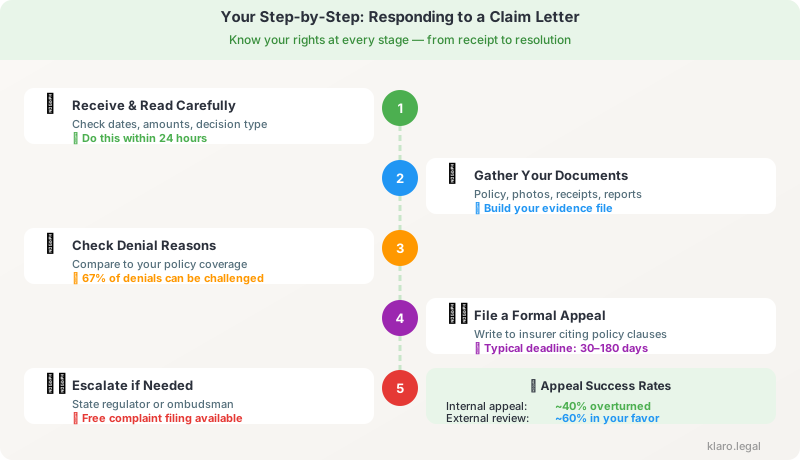
Disagreeing with your adjuster's offer is completely normal, and you have several ways to push back. Here's what's possible, step by step.
Step 1: Request Everything in Writing
Ask the adjuster to send you the full written breakdown of how they calculated your settlement. Request the specific policy sections they relied on. This gives you a paper trail and often reveals where the numbers came from.
Step 2: Get Your Own Repair Estimate
Get two or three independent repair estimates from licensed contractors or mechanics. If those estimates are significantly higher than what the adjuster offered, you have concrete evidence to support a higher payment.
Step 3: File a Formal Dispute
Most insurers have a formal dispute or appraisal process. Submit your counter-evidence in writing. Reference specific policy language. Keep copies of everything you send. This creates a documented record if you need to escalate.
Step 4: Hire a Public Adjuster
You can hire a public adjuster at any point, even after you've already been working with a staff adjuster. They'll conduct their own assessment and negotiate on your behalf. Their fee (typically 5–15% of the settlement) often results in a net gain for policyholders.
Step 5: File a Complaint With Your State Insurance Department
Every state has an insurance regulatory body. If you believe your claim was handled unfairly, file a complaint with your state's Department of Insurance. This is free, creates an official record, and insurers take regulatory complaints seriously.
Check for an Appraisal Clause in Your Policy
Many policies include an appraisal clause. This lets both sides hire independent appraisers, who then agree on an umpire to resolve the dispute. It's faster and less costly than litigation, and it's a right, not a favor the insurer grants you.
Dos and Don'ts When Dealing With a Claims Adjuster
What you say and do during the claims process can directly affect your payout. Here's what typically helps: and what typically hurts.
Do: Document Everything Before the Adjuster Arrives
Take photos and videos of all damage immediately, before any cleanup or repairs. Make a written list of damaged or destroyed items with approximate values and purchase dates. The more evidence you have upfront, the stronger your position.
Do: Keep Records of Every Communication
Note the date, time, name, and what was said in every call or meeting with the adjuster. Follow up verbal conversations with a brief email summary. This creates a paper trail that can be invaluable if you dispute the outcome.
Don't: Speculate or Admit Fault
Stick to the facts of what happened, not theories about causes or who was responsible. Statements like 'I probably should have maintained it better' can be used to reduce your payout or deny coverage entirely.
Don't: Accept the First Offer Without Review
The first offer is rarely the final offer. Take time to review the settlement breakdown, compare it to your own estimates, and understand what you're signing. Once you sign a release, it's very difficult to go back for more.
Do: Know What Your Policy Actually Covers
Read your declarations page before the adjuster arrives. Know your deductible, whether you have ACV or RCV coverage, and what exclusions apply. Adjusters know your policy well, it helps to know it too.
Don't: Sign a Release Until You're Satisfied
A release of liability typically closes your claim permanently. Don't sign one if you're still waiting for additional damage to appear (especially with water damage or structural issues) or if you're still negotiating.
How Long the Claims Process Takes
Timelines vary by claim type and state law. Here's a general picture of what to expect, and when delays become a problem.
Initial Acknowledgment: 1–3 Days
Most states require insurers to acknowledge your claim within 10–15 days. In practice, you'll often hear from an adjuster within 1–3 business days for straightforward claims.
Investigation Period: 1–4 Weeks
Simple claims (a stolen bike, a minor fender-bender) may be resolved in days. Complex claims involving property damage, injuries, or disputed liability can take weeks to investigate properly.
Settlement Decision: 30–45 Days (Typical)
Many states set a 30–45 day window for insurers to accept or deny a claim after receiving all documentation. Check your state's specific rules, your state Department of Insurance website lists these timelines.
If You Dispute: Add Weeks to Months
Formal disputes, appraisal processes, or regulatory complaints add significant time. Plan for an additional 4–12 weeks if you pursue negotiation. Litigation takes much longer and is typically a last resort.
Total Loss vs. Repair: How Adjusters Decide
One of the most consequential decisions an adjuster makes, especially after a car accident or fire, is whether to declare something a total loss or approve repairs. Here's how that calculation works.
The Total Loss Threshold
For cars, most states declare a total loss when repair costs exceed a percentage of the vehicle's actual cash value, commonly 70–80%. Example: a car worth $10,000 with $8,000 in repair costs would likely be declared a total loss in most states.
How They Calculate ACV for Vehicles
Adjusters use pricing guides, comparable vehicle listings, and condition assessments to arrive at ACV. You can challenge this number by finding comparable vehicles in your area listed at higher prices and presenting them to the adjuster.
Total Loss on Property Claims
For homes, a total loss typically means damage exceeds a significant portion of the structure's insured value, often 50–75%. After major wildfires or flooding, total-loss declarations are common and the process involves more documentation.
Your Rights After a Total Loss Declaration
If your vehicle or property is declared a total loss, you generally have the right to contest the ACV calculation, request the adjuster's valuation methodology in writing, and get independent appraisals. You do not have to accept the first ACV offered.
How to Read Your Insurance Claim Letter
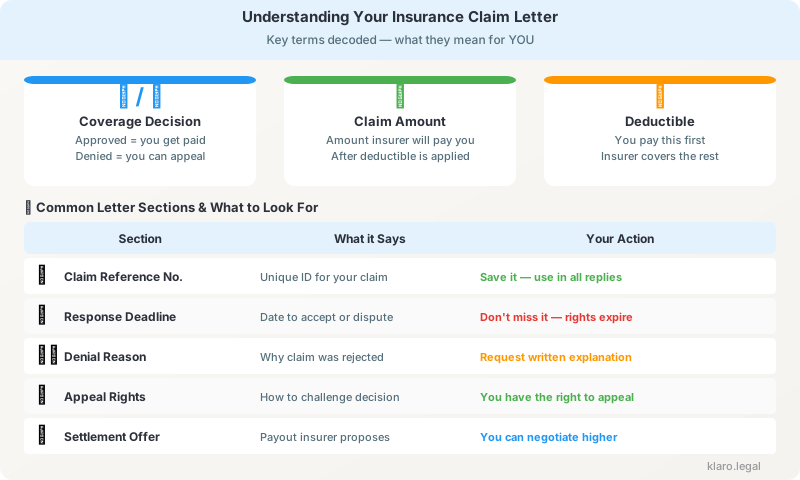
Your settlement or denial letter is the official record of the adjuster's decision. Here's how to read it so nothing gets missed.
The Settlement Amount Line
Find the total offered amount and the breakdown behind it. Look for how depreciation was applied, whether your deductible was subtracted, and whether all your claimed items appear. Compare the list to what you originally submitted.
Coverage Accepted or Denied
The letter will state whether your claim is covered, partially covered, or denied. If denied, it must cite the specific policy language justifying the denial. If this citation is vague or missing, you can request a written clarification.
Deadlines Buried in the Letter
Many settlement letters include deadlines, for accepting the offer, for providing additional documentation, or for invoking the appraisal clause. These deadlines are real and can affect your rights. Read the letter with a highlighter.
The Release of Liability Clause
If a settlement check or document includes a release of liability, understand that signing it typically closes your claim permanently. Do not sign until you're confident the settlement is final and complete.