


What Is a 1099 Form? (And Why You Got One)
A 1099 form tells the IRS someone paid you money that wasn't wages from an employer. You get one because a client, bank, or broker reported that payment under your name.
It's not a bill
A 1099 doesn't ask you to pay anything directly. It's an information return, a record of income the payer already reported to the IRS.
You get a copy, so does the IRS
The same numbers on your form are also sent to the IRS. If your tax return doesn't match, it can trigger a notice.
It replaces a W-2 for non-employees
Employees get a W-2 with taxes already withheld. Independent contractors and investors get a 1099 instead, usually with no tax withheld.
One form, many sources
You might get several 1099s in one year: one from a client, one from your bank, one from your brokerage. Each covers a different kind of income.
A 1099 form is a tax document that reports money paid to you outside a regular job. Banks, clients, and investment platforms send them to you and the IRS. There are over 20 versions, each covering a different type of income.
The 5 Most Common 1099 Types Explained
Over 20 versions of the 1099 exist, but most people only ever see a handful. Here's what each common type actually reports.
| Form | What it reports | Who sends it | |
|---|---|---|---|
| 1099-NEC | Freelance or contractor pay of $600 or more | Clients who paid you directly | |
| 1099-MISC | Rent, prizes, awards, legal settlements, royalties | Businesses making these payments | |
| 1099-INT | Interest earned on savings or bonds | Banks and financial institutions | |
| 1099-DIV | Dividends and capital gain distributions | Brokerages and mutual funds | |
| 1099-B | Sales of stocks, funds, or digital assets | Your brokerage | |
| 1099-R | Retirement, pension, or annuity distributions | Retirement plan administrators |
Box-by-Box: What Each Number Actually Means
Every box on a 1099 has a specific purpose. Here's the tax jargon translated into what it means for you.
Box 1 (1099-NEC): Nonemployee compensation
This is what a client paid you for freelance or contract work. It's the number you report as self-employment income.
Box 4: Federal income tax withheld
If a client withheld tax before paying you (usually because you didn't provide a tax ID), it shows up here. You get credit for it on your tax return.
Box 1 (1099-INT): Interest income
The total interest your bank or account paid you during the year. It counts as taxable income.
Box 1a (1099-DIV): Total ordinary dividends
All the dividend payments you received from stocks or funds, before any tax treatment breakdown.
Box 1d (1099-B): Proceeds
The total amount you received when you sold an investment, not your profit, just the sale price.
Box 1 (1099-R): Gross distribution
The full amount paid out from your retirement account, before any taxes were taken out.
Gross vs. Net: What Your 1099 Actually Reports
Most 1099 forms report gross amounts, not your actual profit. This distinction affects how much tax you may owe.
1099-NEC reports gross pay
The number in Box 1 is everything a client paid you, before you subtract business expenses. Your net profit is calculated separately on Schedule C.
1099-B can show both
This form often lists both proceeds (gross sale price) and cost basis (what you originally paid). Your actual gain or loss is the difference between them.
1099-INT and 1099-DIV are gross income
Interest and dividends are reported in full. There are no expenses to subtract, so the number on the form is what you report as income.
Why this matters for your taxes
Reporting the gross 1099-NEC amount as your final income, without deducting expenses, can mean overstating what you owe. Expenses are typically claimed on a separate schedule.
6 Common 1099 Mistakes and What They Mean
Small errors on 1099 forms are common. Here are the ones that trip people up most often.
Ignoring a 1099 because you didn't get paid directly
If a platform or client reported income under your name, the IRS expects to see it on your return, even if you disagree with the amount.
Confusing gross proceeds with actual profit
On a 1099-B, the proceeds box is not your gain. Your gain or loss depends on what you originally paid for the asset.
Missing a 1099 that arrived by mail
Not every payer sends 1099s electronically. Paper copies can go to an old address, so it's worth checking correspondence from past clients or banks.
Assuming no 1099 means no tax owed
Some payers only issue a 1099-NEC above the $600 threshold. Income under that amount is still generally taxable, even without a form.
Not checking your name and tax ID
A wrong Social Security number or misspelled name can cause mismatches with IRS records, sometimes leading to a notice later.
Reporting the wrong box on the wrong line
Each 1099 type has its own reporting spot on a tax return. Mixing up interest income with dividend income can distort the total.
What If Your 1099 Looks Wrong?
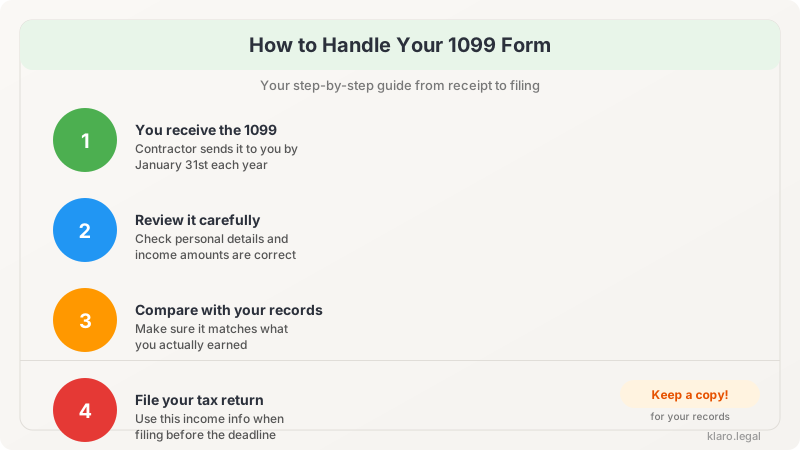
Errors on 1099 forms happen more often than people expect. The law gives payers a way to correct them.
Contacting the payer to request a corrected form is the standard first step. Payers can file a 'corrected' 1099 with the IRS.
The payer can be asked to void or correct the form. Until it's corrected, the IRS record still shows the original amount.
A tax return can still be filed using the correct figures, along with an explanation if the reported number differs from IRS records.
The income is still generally reportable based on your own records, even without the form in hand.
How to Read a 1099 from Fidelity, Schwab, or Other Brokers
Brokerage 1099s often combine several forms into one packet. Here's what to look for.
It's usually a 'Consolidated 1099'
Brokers often bundle 1099-B, 1099-DIV, and 1099-INT into a single multi-page statement, since one account can generate all three types of income.
Look for the summary page first
Most brokers put a summary page at the front listing total proceeds, dividends, and interest before the detailed transaction lists.
Cost basis may say 'not reported'
For older investments, brokers sometimes don't have your original purchase price on file. You may need your own records to calculate gain or loss.
Digital asset sales appear on 1099-B too
Sales of cryptocurrency and other digital assets are increasingly reported on the same 1099-B used for stocks, under updated IRS reporting rules.
1099 vs. W-2: What's the Difference?
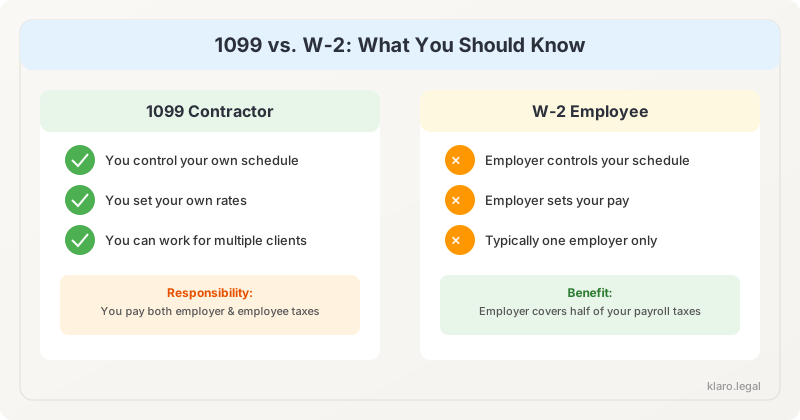
These two forms report income very differently. Knowing which one you have changes how you file.
Tax withholding
Who sends it
Self-employment tax
1099 Jargon, Translated
IRS terminology can make a simple form feel confusing. Here's what the common phrases actually mean.
Nonemployee compensation
Money you earned as a freelancer or contractor, not as a salaried employee.
Backup withholding
Tax a client held back from your payment, usually because your tax ID wasn't provided correctly. Currently set at 24%.
Cost basis
What you originally paid for an investment. It's used to figure out your actual gain or loss when you sell.
Payer's TIN
The ID number of whoever sent you the form, similar to a Social Security number, but for a business.
Checklist: Reviewing Your 1099 Before You File
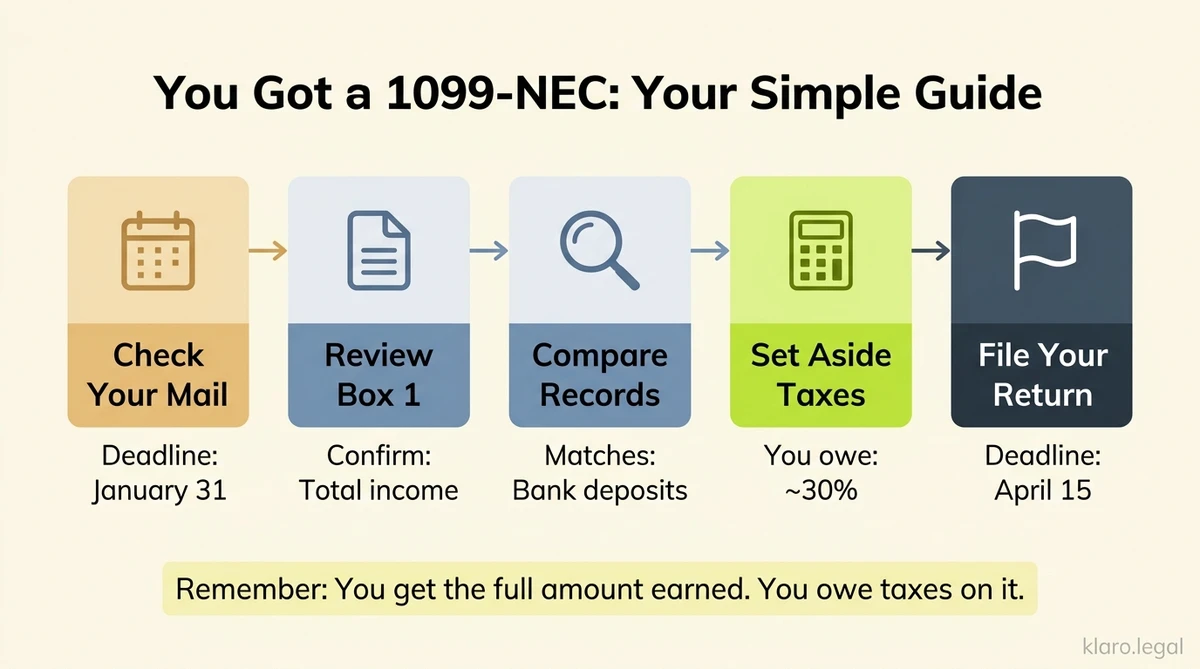
A quick pass over your 1099 can catch errors before they become a problem on your tax return.
Name and tax ID are correct
Check that your legal name and Social Security number match your records exactly.
You recognize the payer
Confirm you actually worked with or held an account with the business listed as the payer.
The amount matches your own records
Compare the reported figure with invoices, bank statements, or brokerage confirmations.
You know which box the income belongs in
Different 1099 types have different reporting boxes, make sure you're using the right one on your return.
You have all your expected 1099s
Cross-check against clients, banks, and brokerages you worked with during the year.